
Skip to content
  • Finnish Government
    • Prime Minister's Office
    • Ministry of Defence
    • Ministry of Transport and Communications
    • Ministry for Foreign Affairs
    • Ministry of Finance
    • Ministry of Economic Affairs and Employment
    • Ministry of Justice
    • Ministry of Education and Culture
    • Ministry of Social Affairs and Health
    • Ministry of the Interior
    • Ministry of Agriculture and Forestry
    • Ministry of the Environment

Valitse kieli:

This page is in Finnish. Go to the English site »

Or choose language:

Den här sidan är på finska. Gå till den svenska versionen av sidan »

Eller välj språk:

Dát siidu lea suomagillii. Sirdás davvisámegielat siidduide »

Dahje vállje giela:

Язык этого сайта финский. Перейти на русскоязычный сайт »

Или выберите язык:

Cette page est en finnois. Aller sur le site en français »

Ou choisir la langue:

Diese Seite ist auf Finnisch. Wechseln Sie zur deutschen Version »

Oder wählen Sie Ihre Sprache:

Tämä sivu on englanniksi. Siirry suomenkieliseen sivustoon »

Tai valitse kieli:

Choose language:

Den här sidan är på engelska. Gå till den svenska versionen av sidan »

Eller välj språk:

Язык этого сайта английский. Перейти на русскоязычный сайт »

Или выберите язык:

Dát siidu lea eŋgelasgillii. Sirdás davvisámegielat siidduide »

Dahje vállje giela:

Cette page est en anglais. Aller sur le site en français »

Ou choisir la langue:

Diese Seite ist auf Englisch. Wechseln Sie zur deutschen Version »

Oder wählen Sie Ihre Sprache:

Tämä sivu on ruotsiksi. Siirry suomenkieliseen sivustoon »

Tai valitse kieli:

This page is in Swedish. Go to the English site »

Or choose language:

Välj språk:

Язык этого сайта шведский. Перейти на русскоязычный сайт »

Или выберите язык:

Dát siidu lea eŋgelasgillii. Sirdás davvisámegielat siidduide »

Dahje vállje giela:

Cette page est en suédois. Aller sur le site en français »

Ou choisir la langue:

Diese Seite ist auf Schwedisch. Wechseln Sie zur deutschen Version »

Oder wählen Sie Ihre Sprache:

Tämä sivu on pohjois-saameksi. Siirry suomenkieliseen sivustoon »

Tai valitse kieli:

This page is in North Saami. Go to the English site »

Or choose language:

Den här sidan är på nordsamiska. Gå till den svenska versionen av sidan »

Eller välj språk:

Язык этого сайта северосаамский. Перейти на русскоязычный сайт »

Или выберите язык:

Vállje giela:

Cette page est en same du Nord. Aller sur le site en français »

Ou choisir la langue:

Diese Seite ist auf Nordsamisch. Wechseln Sie zur deutschen Version »

Oder wählen Sie Ihre Sprache:

Tämä sivu on venäjäksi. Siirry suomenkieliseen sivustoon »

Tai valitse kieli:

This page is in Russian. Go to the English site »

Or choose language:

Den här sidan är på ryska. Gå till den svenska versionen av sidan »

Eller välj språk:

Dát siidu lea ruoššagillii. Sirdás davvisámegielat siidduide »

Dahje vállje giela:

выберите язык:

Cette page est en russe. Aller sur le site en français »

Ou choisir la langue:

Diese Seite ist auf Russisch. Wechseln Sie zur deutschen Version »

Oder wählen Sie Ihre Sprache:

Tämä sivu on ranskaksi. Siirry suomenkieliseen sivustoon »

Tai valitse kieli:

This page is in French. Go to the English site »

Or choose language:

Den här sidan är på franska. Gå till den svenska versionen av sidan »

Eller välj språk:

Dát siidu lea fránskkagillii. Sirdás davvisámegielat siidduide »

Dahje vállje giela:

Язык этого сайта французский. Перейти на русскоязычный сайт »

Или выберите язык:

Choisir la langue:

Diese Seite ist auf Französisch. Wechseln Sie zur deutschen Version »

Oder wählen Sie Ihre Sprache:

Tämä sivu on saksaksi. Siirry suomenkieliseen sivustoon »

Tai valitse kieli:

This page is in German. Go to the English site »

Or choose language:

Den här sidan är på tyska. Gå till den svenska versionen av sidan »

Eller välj språk:

Язык этого сайта немецкий. Перейти на русскоязычный сайт »

Или выберите язык:

Cette page est en allemand. Aller sur le site en français »

Ou choisir la langue:

Wählen Sie Ihre Sprache:

  • Valitse kieli Suomi
  • Välj språket Svenska
  • Select language English
Media
Go to Sisäministeriö site frontpage
  • Frontpage
  • Areas of expertise
    • Police
    • Rescue services
    • Emergency response
    • Border management
    • Migration
    • National security
    • Civilian crisis management
    • Flag and arms of Finland
  • Current issues
  • Projects and legislation
  • Publications
  • Ministry
  • Contact
  • News
  • Sign up for news
  • Ukraine
  • Situation at the eastern border
suomiLue artikkeli suomeksi svenskaLäs artikeln på svenska English

Public trust in police remains high
Ministry of the Interior
Publication date 29.8.2025 9.25
Type:Press release
Photo: Mika Pakarinen

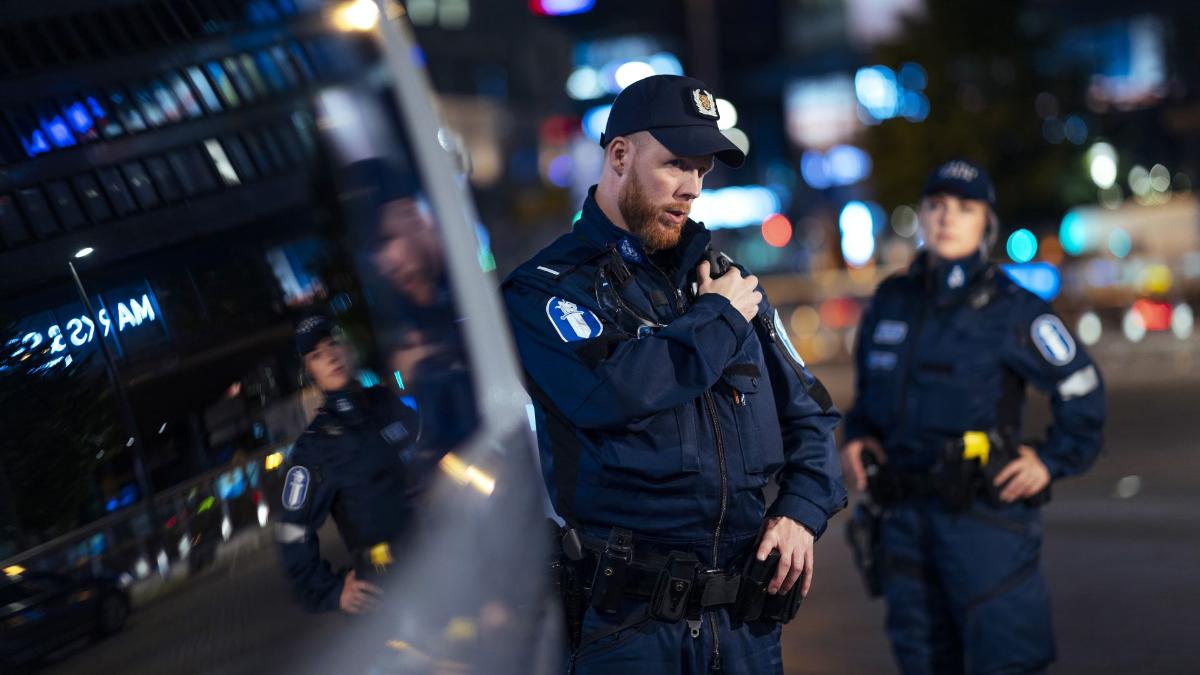
Public trust in the police has remained stable for a long time. Of those who responded to the latest Police Barometer survey, 92 per cent trust the police a lot or a fair amount. Respectful treatment of people by the police and fair police activities affect people’s trust.

Around 85 per cent of the respondents considered that the police treat people with respect often or very often, while around 76 per cent considered that the police make fair and impartial decisions often or very often.

Trust in police activities is rather uniform across Finland. Trust is highest in Southwest Finland (around 95%) and Western Uusimaa (94%) and lowest in Eastern Finland (89%). There are no major differences in trust between different age groups or genders. However, trust seems to grow somewhat with age. Around 94 per cent of pensioners trust the police. Low-income and unemployed people trust the police less than others. 

“Finnish people’s trust in the police is high. This barometer shows, once again, that we have skilled and well-trained police officers in Finland. One of the strengths of Finnish society is our trust in the police. They earn this trust every day through their field work and efforts to combat crime. This is something that we absolutely want to foster,” says Minister of the Interior Mari Rantanen.

In addition to the police, Finns also trust other security authorities, such as the fire and rescue authorities. Trust in the activities of the emergency response centres and the Finnish Defence Forces is also high. 

Concern about offences committed by young people is reflected in responses

The Police Barometer also measures the respondents' concern over different criminal phenomena. In the 2024 barometer, questions regarding offences committed by young people, organised crime, gang crime and fraud offences were added to the survey. Other criminal phenomena examined in the survey include assaults, sexual harassment, terrorism and hate crimes.

Around 84 per cent of the respondents were concerned about offences committed by young people, 73 per cent about offences committed with a firearm, 76 per cent about drug abuse and drug dealing in public places, and 73 per cent about organised crime and gang crime. The least concern was expressed over house burglaries (46%).

“We strive to address people's concerns. We have managed to halt the strong growth in the number of offences committed by young people, and the number of robbery offences has decreased significantly as well.  We have also intervened in the increased drug dealing in public places and continued to refer drug users to treatment. Several international joint operations have been carried out to combat the import and distribution of drugs. The aim is to ensure that Finland continues to be one of the safest countries in the world,” says National Police Commissioner Ilkka Koskimäki.

It is necessary to revise the contents of the Police Barometer survey from time to time to ensure that the questions correspond to the changes that have taken place in the operating environment of the police. Both crime and police activities have changed. Organised crime and gang crime have increased in the Nordic countries, the threat of terrorism has grown in Europe, and cybercrime and international economic crime have taken new forms all over the world.

People still consider their own neighbourhood relatively safe

The Police Barometer also examines how serious the respondents feel the crime situation is in their neighbourhood. Approximately 72 per cent of the respondents did not consider the crime situation in their neighbourhood too serious. Around one in four respondents considered the situation fairly serious. The situation in Eastern Uusimaa differs from the other areas. As many as 34 per cent of the respondents living in the area considered the crime situation in their neighbourhood fairly or very serious. In Ostrobothnia, in contrast, only 16 per cent of the respondents considered that crime is a fairly or very serious problem in their neighbourhood.

Respondents were of the opinion that the police should be more visible in the daily lives of people than at present. According to respondents, greater police visibility would increase both the sense of security and actual security. In addition to police visibility, traffic surveillance and the investigation of violent and narcotics offences were now considered more important than before.

Looking at the big picture, the development took a negative turn in the mid-2010s. The reasons behind this are not fully known, but the decline in the number of police officers in the mid-2010s and the many changes that have occurred in crime may have affected the situation. 

Property offences most often reported to police

Offences can be roughly divided into three main categories: property offences, violent offences and sexual offences. Around 77 per cent of property offences, such as house burglaries or attempted burglaries, are reported to the police. A report of an offence is filed in 32 per cent of violent offences, such as armed threats or robberies or attempts at these offences. Only 6–9 per cent of sexual offences are reported to the police. 

The most common reason for not reporting an offence to the police is that the offence is not considered serious enough. This particularly applies to property offences. Reluctance to report an offence may also be influenced by the fact that the matter is considered private or the victim fears retaliation. These reasons are often related to violent and sexual offences.

Approximately 61 per cent of the respondents estimated that the police are relatively successful in preventing violent crime or threat of violence in Finland. Around half of the respondents were of the opinion that the police are relatively successful in catching burglars.

Background

The Police Barometer survey is carried out in cooperation between the Ministry of the Interior, the Police University College and Statistics Finland. 
The aim of the Police Barometer is to study public opinion on police activities and the internal security situation in Finland. The survey data was collected during autumn 2024. A sample of 8,500 persons was selected in Statistics Finland's database on the population of Finland. The population of the survey consisted of persons aged between 15 and 79 residing in mainland Finland. A total of 4,164 persons responded to the survey, making the response rate around 49.0 per cent.

Inquiries:
Matti Vuorensyrjä,
Researcher, Police University College, tel. +358 295 483 806, [email protected]
Aino Salmi, Chief Specialist, Ministry of the Interior, tel. +358 295 488 685, aino.m.salmi(at)gov.f

Police Barometer 2024 (in Finnish)
Police University College crime department of law enforcement publications research trust

MINISTRY OF THE INTERIOR
Sisäministeriö | Inrikesministeriet

Kirkkokatu 12, Helsinki
PO Box 26, FI-00023 Government
Tel. 0295 480 171 (switchboard)
[email protected]

About the site
Accessibility statement
Data protection
Sitemap
Questions and feedback

X (Twitter)
Instagram
LinkedIn
Facebook
YouTube

Search page
  • Frontpage
  • Areas of expertise
    • Police
      • Government Programme measures in the police sector
      • Crime in Finland
      • Organised crime
        • Fight against organised crime
      • Counter-terrorism
        • Counter-terrorism measures in Finland
      • Violent radicalisation
        • Action plan monitoring
      • Hate crime
        • Online targeting and shaming
      • Human trafficking
      • Economic crime and the shadow economy
      • Cybercrime
        • Tackling cybercrime
      • Firearms
        • Firearms legislation
      • Gambling
      • Fundraising
      • Public order and security
      • Private security sector
      • Agencies and responsibilities
    • Rescue services
      • Government Programme measures in rescue services
      • Rescue operations
        • Maritime search and rescue
        • Emergency warnings
      • Accident prevention
        • Chimney sweeping
        • Smoke alarms and other fire safety equipment
          • Smoke alarm
          • Responsibility for smoke alarms to change in 2026
          • Carbon monoxide and heat detectors
          • First-aid extinguishing equipment
          • Fire safety systems of buildings
          • Systems connected to the ERC
          • Supervision of fire safety equipment
          • Frequently asked questions about smoke alarms
        • Emergency plan
        • Fire safety
      • Preparedness
        • National risk assessment
        • Civil defence
        • Civil defence shelters
        • Preparedness guide
      • International assistance
        • International cooperation in civil preparedness
        • Civil Protection Mechanism
      • National objectives for wellbeing services counties
      • Rescue service agencies and responsibilities
    • Emergency response
      • Emergency response centres
      • Services
    • Border management
      • Government Programme measures to reform border security
      • Border surveillance
      • Maritime search and rescue
      • Fight against environmental damage in sea areas
      • Smart Borders
      • Frontex cooperation
      • Agencies and responsibilities
    • Migration
      • Government Programme measures to reform migration policy
        • Stricter conditions for permanent residence permits
      • Agencies and responsibilities
        • Preparing for large-scale influxes of migrants
      • Migration and asylum policy
        • Family reunification
      • Refugees and asylum seekers
        • Quota refugees
      • EU migration and asylum system
      • Removal and departure from the country
        • Voluntary and forced return
        • Readmission agreements
      • Nationality
        • Preconditions for and effects of acquiring Finnish citizenship
        • Expatriate Finns
      • Combating irregular entry and stay
    • National security
      • Government Programme measures to reform national security
      • What is national security?
        • Critical Infrastructure Protection and Crisis Resilience Act
      • Civilian intelligence
        • Questions and answers about civilian intelligence legislation
      • Hybrid threats
      • Cyber security
    • Civilian crisis management
      • Finland's objectives
      • Finnish experts serving in operations
      • Recruitment and training
      • Agencies and responsibilities
      • Legislation
    • Flag and arms of Finland
      • Flag days
        • Flagdays 2025
        • Proposals for flag days
      • Flying the flag at half mast
      • Flying the EU flag
      • Order of precedence
      • About the flag
        • History of the flag
      • Arms of Finland
      • The flag and coat of arms in commercial activities
  • Current issues
    • News
      • News archive
    • Sign up for news
    • Ukraine
      • Civilian material assistance to Ukraine
        • Laptops for Ukraine
        • Civilian assistance sent from Finland
      • Helping Ukrainians
      • Temporary protection
      • Frequently asked questions
    • Situation at the eastern border
  • Projects and legislation
    • Reform of legislation on civilian intelligence
    • Passport project
    • Strengthening crime prevention
      • Answers to questions about biometric data regulation
    • Reform of the gambling system
      • Questions and answers on gambling system reform
    • Shooting ranges project
    • Reform of the Citizenship Act
      • Frequently asked questions
    • Interoperability of data within EU information systems for security
    • Secure satellite communication services
  • Publications
  • Ministry
    • Tasks and objectives
    • Management and organisation
      • Minister of the Interior
      • Permanent Secretary
      • Departments and units
    • Branch of government
    • Joint strategy for the Ministry's administrative branch
    • Operations and finances
    • Government Report on Internal Security
    • International and EU cooperation
      • Sub-committees on EU affairs
      • Finland and Nato
    • Oversight of legality
      • Oversight of legality at agencies within the Ministry’s branch of government
    • Research
      • Sentimentti data tool
      • Strategic foresight
    • Funds
    • Ministry as workplace
      • Personnel
      • Responsibility
      • Ministry’s pay system
      • Applying for a job
      • Traineeships
    • Whistleblower protection
    • History of the ministry
  • Contact
    • Submissions for consideration
    • Request for information
    • Contact information of the management, departments and units
    • Communications Unit
    • Data protection
      • Information on cookies
    • Accessibility statement
    • Feedback