
A functioning smoke alarm is the foundation of fire safety in housing
A smoke alarm is mandatory in all homes. Building owners have the obligation to purchase and maintain smoke alarms.
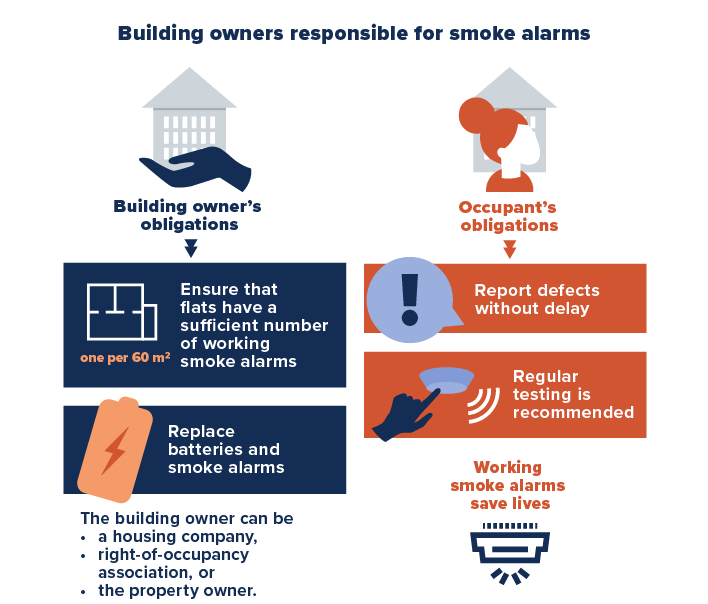
The building owner, such as a housing company, is responsible for ensuring that each dwelling in a building has a sufficient number of functioning smoke alarms. If all dwellings have identical smoke alarms of the same age, maintenance can usually be carried out proactively and in a planned manner. This reduces, for example, night-time maintenance call-outs caused by exhausted batteries.
Residents must immediately notify the owner of the building of any defects in the smoke alarm, such as exhausted batteries, or if they have otherwise noticed that the smoke alarm is not working.
In accommodation and care facilities, the operator is responsible for purchasing and maintaining smoke alarms.
Equipment requirements and the number of smoke alarms
Smoke alarms may be either conventional battery-powered units or mains-powered units. Mains-powered smoke alarms also have battery backup in case of power outages.
A smoke alarm detects a fire and alerts those in the dwelling as early as possible. In order for the smoke alarm to react to smoke at an early stage, and for the alarm to be audible everywhere, the dwelling must have a sufficient number of correctly placed and functioning smoke alarms. Because smoke rises, smoke alarms must be installed on the ceiling and at least half a metre away from the wall.
There must be at least one smoke alarm for every 60 square metres, or part thereof.
Read more about where to place smoke alarms | pelastustoimi.fi
Test smoke alarms regularly
Smoke alarms must be kept in working order. Maintenance responsibility includes regularly replacing smoke alarm batteries and replacing the smoke alarm when the device fails or reaches the end of its service life. The service life of a smoke alarm is usually up to 10 years.
Residents should test smoke alarms once a month by pressing the test button. Testing helps detect faults in smoke alarms and allows residents to ensure that the smoke alarms in their home are functioning properly.
Responsibilities for smoke alarms changed on 1 January 2026, when the obligation to purchase and maintain smoke alarms was transferred from the possessor of the dwelling, that is, the resident, to the owner of the building. The changes affect housing companies and rental housing companies, in particular.